
Frame & seating
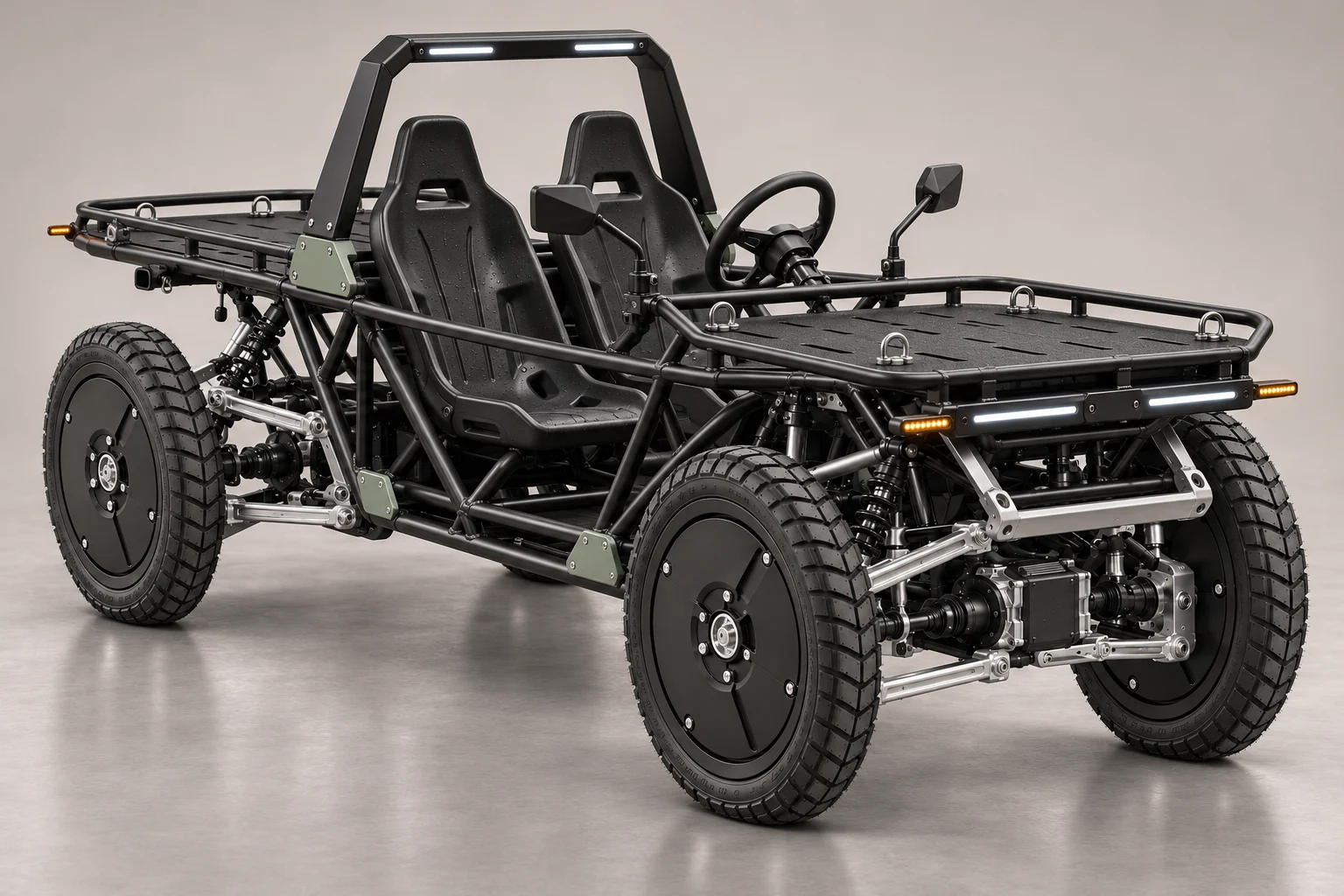
Open sides give direct access to two molded plastic seat shells. A single angular Targa hoop frames the cockpit and provides a mounting point for accessories.
LAND × Car Design Academy · 2035 concept
A compact electric cyclecar for the back roads, small jobs and shared trips of rural life.
Explore the platform
The purpose
Check the property, take produce to market, or drive out with a friend. The UN–CAR puts two seats and accessible cargo space on a small electric platform built around those everyday trips.
The platform
A slightly longer stance leaves space for a forward load platform, two molded weatherproof seats and a modular rear deck. Exposed welded steel tubes define the shape. Small sage panels bolt on only where a surface is needed.
Open sides give direct access to two molded plastic seat shells. A single angular Targa hoop frames the cockpit and provides a mounting point for accessories.
The design calls for LAND Scrambler wheels and tires with aero covers. Slim road lamps and white or amber forward-facing hoop lights define the front. A red center high-mounted stop lamp faces rearward.
The front platform has exposed tie-down points. The rear deck accepts removable cases, crates and task-specific fixtures at shared mounting points.
A proposed mode for moving tools or supplies at walking pace while you stay beside the vehicle. A hold-to-run control would let you stop by releasing it.
Vehicle views
Select a view or press Play.
In use
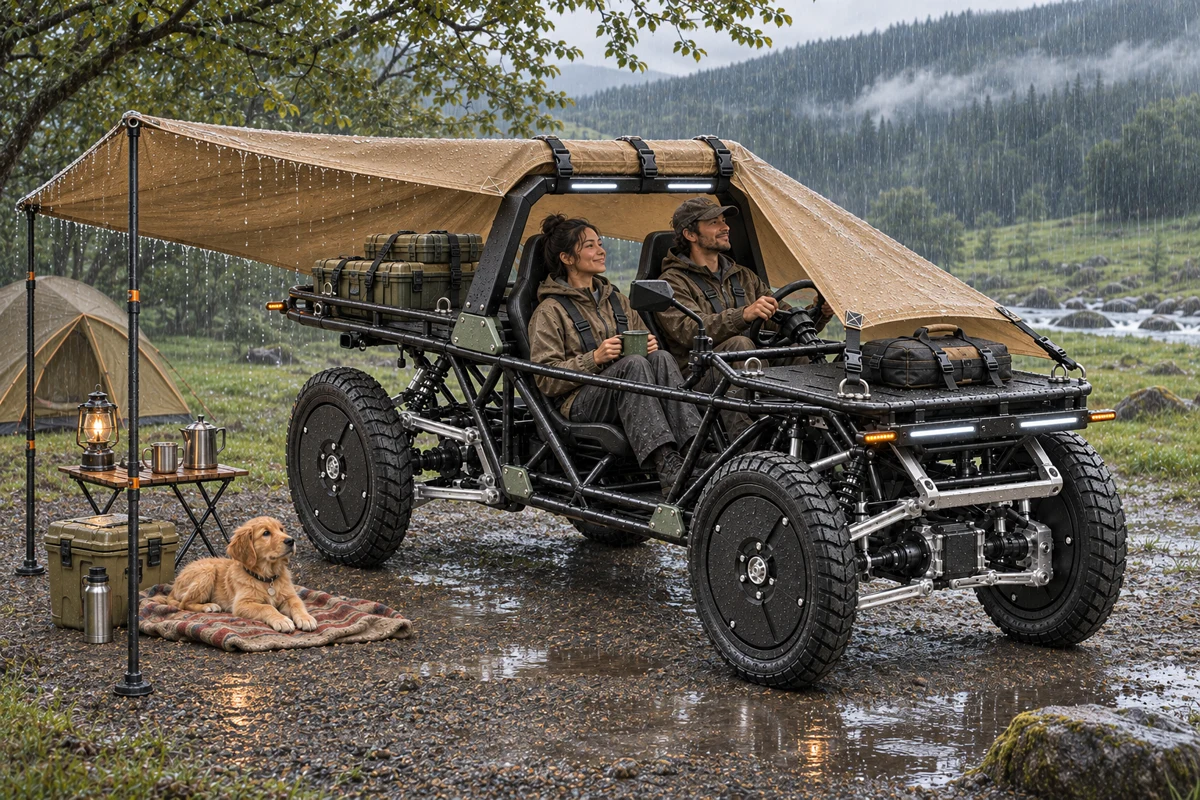
The canvas straps to the Targa hoop and pitches out from the vehicle. The cockpit, loaded decks and puppy share the same shelter.
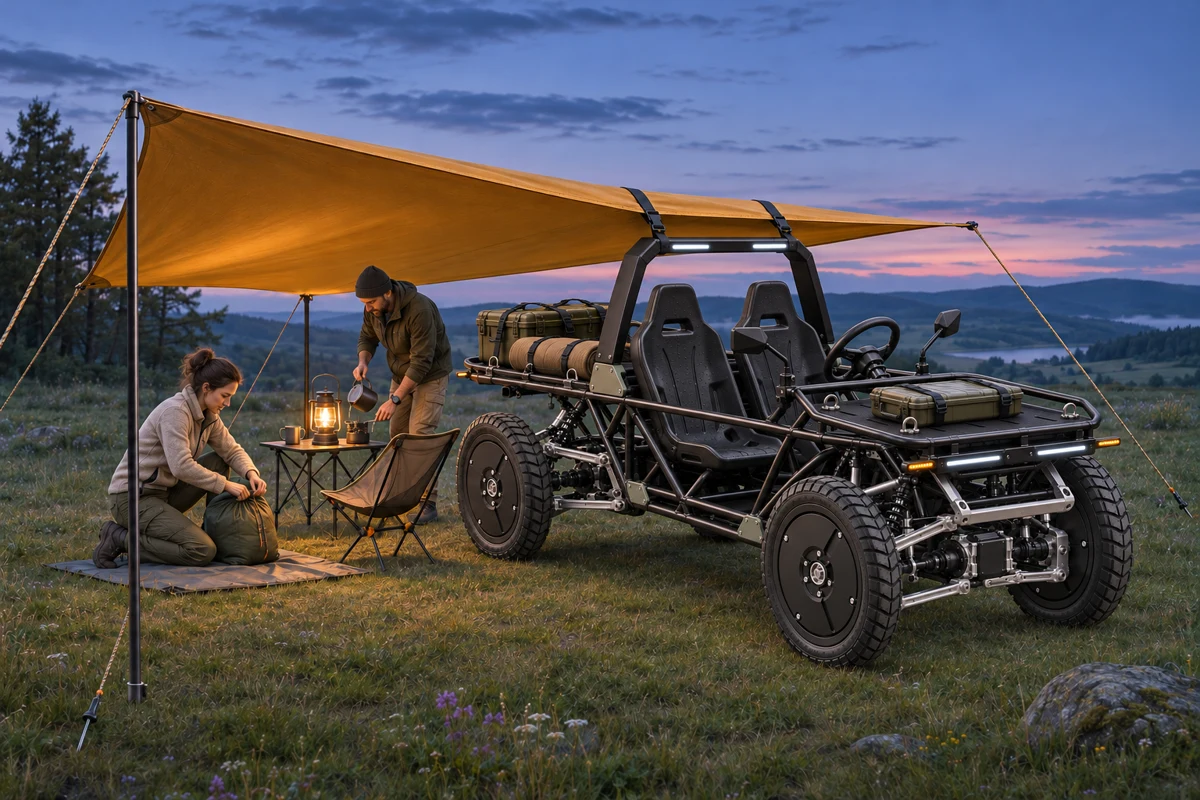
The Targa hoop anchors one edge of a larger canvas awning. Two poles hold the far edge, leaving room to sit and work beside the car with the rear load under cover.
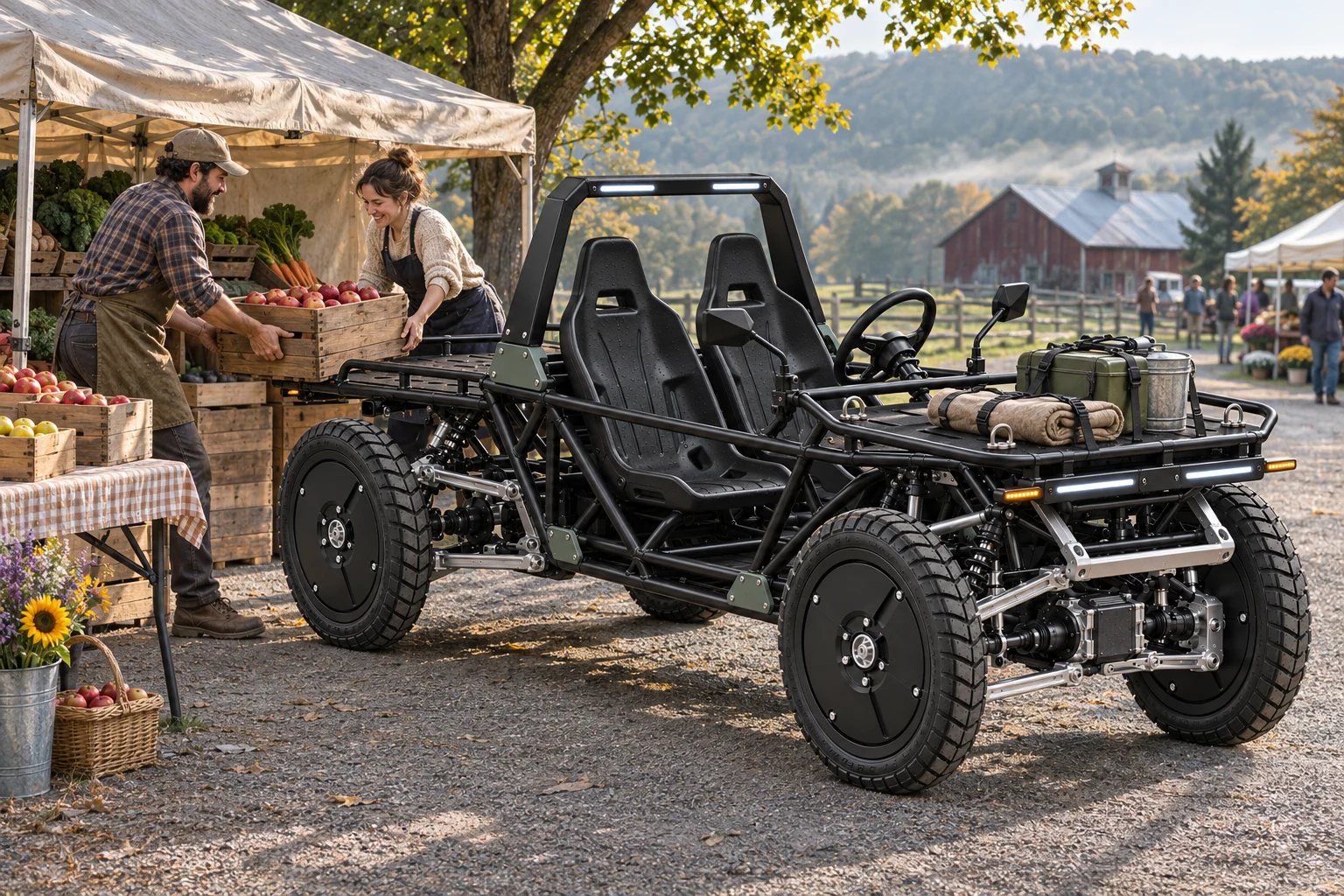
Crates come off the rear deck and go straight onto the stall table. The front platform keeps smaller supplies close at hand.
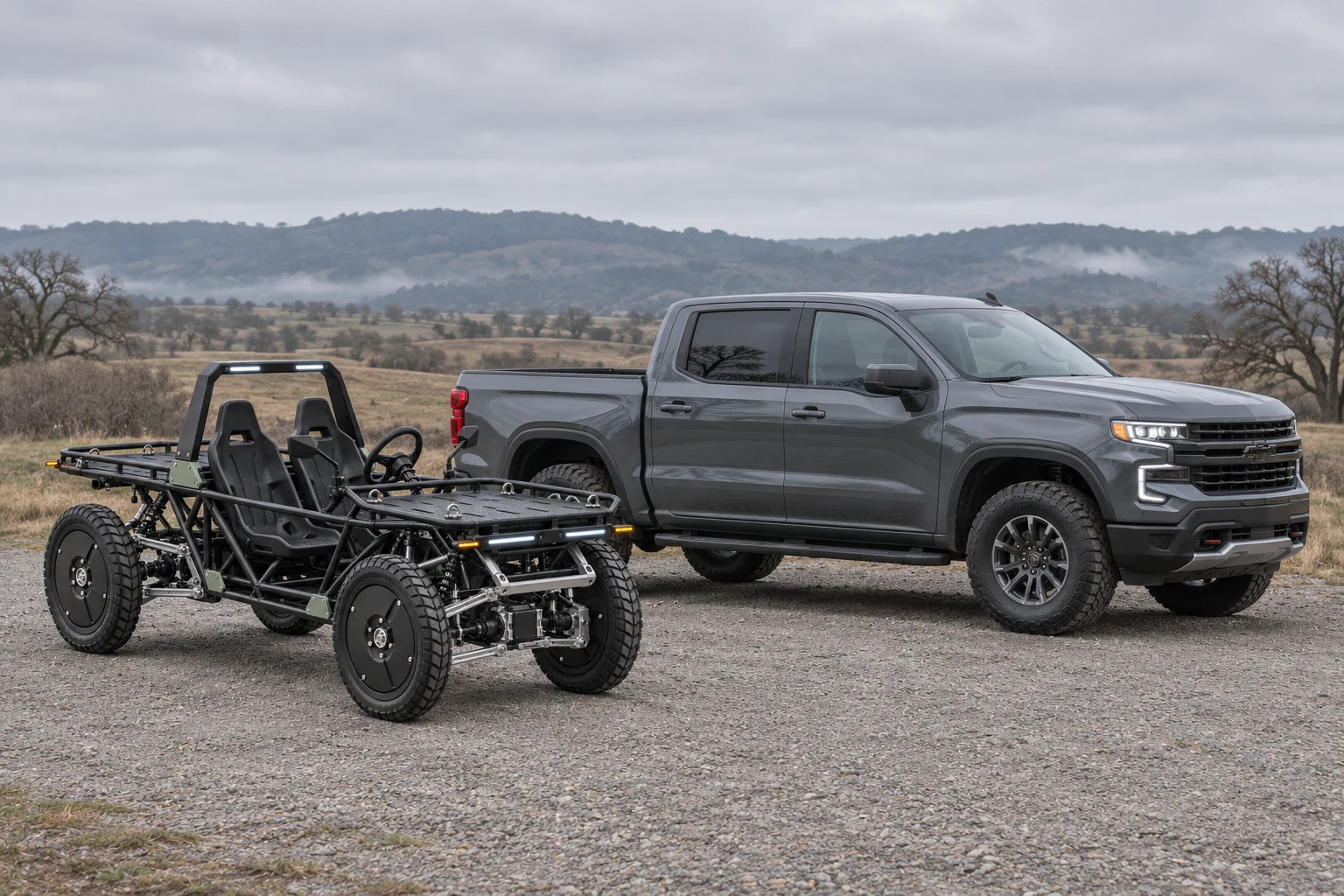
The two-seat UN–CAR puts two open cargo decks on a much smaller platform than a full-size pickup. Illustrative scale.
Manufacturing architecture
One welded chassis forms the backbone. Bolt-on running gear, seats, guards and lights make assembly straightforward and give each part a clear path out for service.
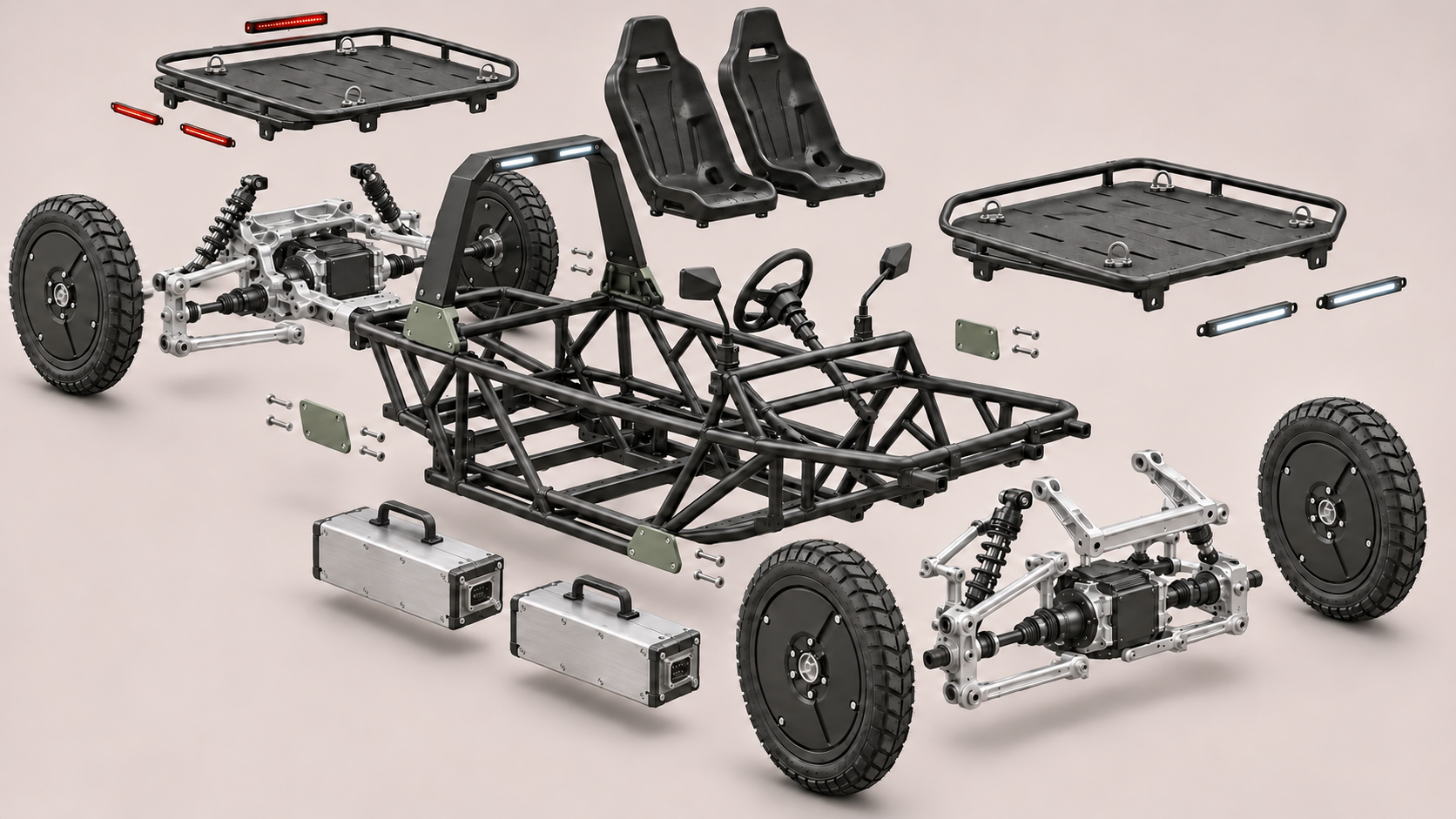
Select a callout to see how the part fits and comes out.
Use current Scrambler wheel and tire assemblies as donor parts, with removable aero covers. Validate the hub adapters, braking loads and wheel selection for four-wheel use.
Package one current LAND motor inboard on the front module. A protected belt reduction and differential would drive the front half-shafts.
Repeat the inboard motor layout on the rear module. Mount the motor and drive assembly together so it can be accessed and removed as a unit.
Two proposed CORE modules sit low in accessible bays. Retainers and interlocked connections would let each pack be removed independently. Pack size and lifting method remain open.
Jig-weld a common chassis with fixed mounting points for the running gear, seats, decks and hoop. The bare frame keeps those attachment points accessible during assembly and service.
Bolt front and rear subframes to the steel chassis. Cast aluminum control arms and subframes are the production direction. Prototype geometry and loads can be checked before committing to casting tools.
Bolt each molded plastic seat shell to the frame separately so it can be removed for cleaning or replaced on its own.
Fasten the small guards and trim panels individually. A damaged panel can be changed without disturbing the frame or adjacent panels.
Use discrete bolt-on lamps with accessible connectors. The front and forward-facing hoop lamps are white or amber. The high center stop lamp on the rear face is red.
Common mounting points support the cargo decks, canopy shelter and proposed work lights. LAND Moto District Scrambler
Development status
Low- or medium-speed registration may be possible where those categories exist, subject to the final vehicle meeting applicable safety and registration requirements.